
Adhar Card UIDAI Complete Guide 2026: Download, Update & Status
Adhar Card UIDAI Complete Guide 2026: Download, Update & Status
Aadhaar has become a backbone of India’s digital identity system and plays a crucial role in everyday life. Whether it is opening a bank account, receiving government subsidies, verifying identity for telecom services, or accessing digital platforms, Aadhaar is widely used across public and private sectors. To simplify Aadhaar-related tasks, UIDAI provides official online platforms such as the MyAadhaar portal and the mAadhaar mobile application.
This article is designed as a complete and easy-to-understand Aadhaar guide where every service is explained clearly in paragraph form. The purpose is to help users understand Aadhaar services without confusion, technical language, or unnecessary complications. This guide focuses on practical use, step-by-step understanding, and real-life applicability of UIDAI services.
215 Cities
Accepted in
4+ Crore
Accepted at over
What is Aadhaar?
UIDAI is a 12-digit unique identification number issued to residents of India by the Unique Identification Authority of India (UIDAI). It is based on demographic information such as name, address, date of birth, and gender, along with biometric data including fingerprints, iris scans, and a photograph. This combination ensures that every Aadhaar number is unique and linked to a single individual.
Aadhaar is voluntary and free of cost, and it is available to Indian residents, including NRIs and foreign nationals who have lived in India for at least 182 days in the past 12 months. Aadhaar is not proof of citizenship; it only verifies identity and residence. Its primary aim is to make service delivery more transparent, efficient, and inclusive.

What is UIDAI?
The Unique Identification Authority of India (UIDAI) is a statutory body established by the Government of India under the Aadhaar Act, 2016. It operates under the Ministry of Electronics and Information Technology (MeitY) and is responsible for implementing and managing the Aadhaar ecosystem across the country.
UIDAI’s role includes issuing Aadhaar numbers, maintaining the Central Identities Data Repository (CIDR), providing authentication services, and ensuring data privacy and security. It also manages Aadhaar Seva Kendras, enrolment centres, and digital platforms like MyAadhaar and the mAadhaar app to make Aadhaar services accessible to everyone.

MyAadhaar Portal One Platform for All Aadhaar Services
The MyAadhaar portal is the official online platform provided by UIDAI that allows users to manage their Aadhaar details without visiting a physical centre. Through this portal, users can download Aadhaar, update personal information, check application status, generate Virtual ID, order a PVC card, and access many other services.
The portal is designed to be user-friendly and secure, using OTP-based authentication to protect personal data. It helps reduce long queues at enrolment centres and enables users to complete most Aadhaar-related tasks from home.
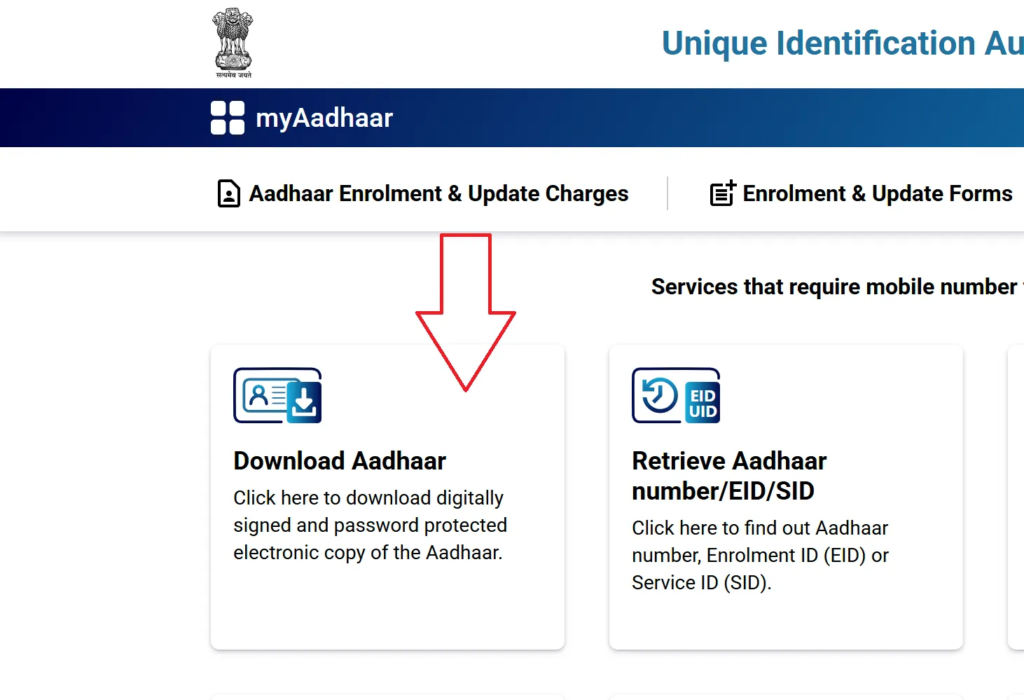
Download Aadhaar (e-Aadhaar)
E-Aadhaar is the electronic version of the Aadhaar card that is digitally signed by UIDAI and legally valid for all purposes. It can be downloaded online and used in place of the physical Aadhaar card whenever required. The downloaded file is password-protected to ensure data security.
To download e-Aadhaar, users need their Aadhaar number, Enrolment ID, or Virtual ID along with access to the registered mobile number. After OTP verification, the Aadhaar PDF can be downloaded instantly. The password is a combination of the first four letters of the name in capital letters and the year of birth, making it secure yet easy to remember.
MyAadhaar Login Process
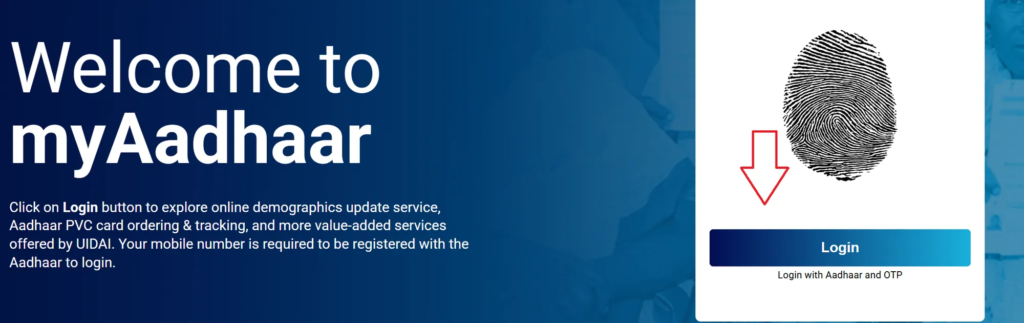
The MyAadhaar login system allows users to securely access their Aadhaar dashboard. Logging in is essential for updating details, generating VID, and accessing personalized services. The login process is simple and entirely OTP-based, ensuring that only the Aadhaar holder can access the account.
Users need to UIDAI enter their 12-digit Aadhaar number, captcha code, and OTP received on the registered mobile number. Once logged in, they can view Aadhaar details, submit update requests, track status, and use various value-added services provided by UIDAI.
Check Aadhaar Enrolment or Update Status
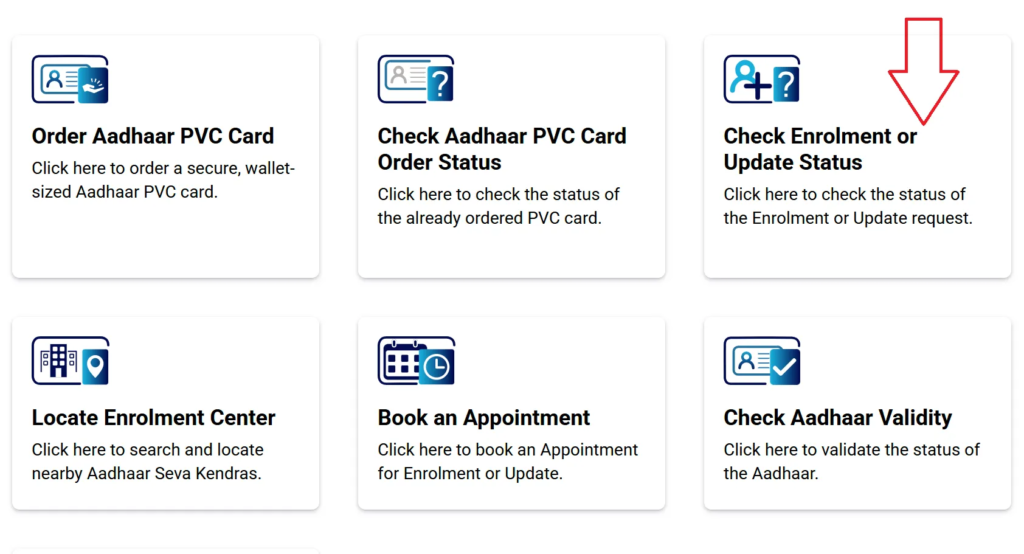
Checking Aadhaar enrolment or update status helps users stay informed about the progress of their application. Whether a new Aadhaar enrolment or a demographic update, UIDAI provides multiple ways to track status easily.
Users can check status online through the MyAadhaar portal by entering their Enrolment ID or Update Request Number and verifying via OTP. Alternatively, they can call the toll-free number 1947 and follow IVR instructions. This service ensures transparency and reduces uncertainty during the processing period.
Update Aadhaar Details Online
UIDAI allows users to update certain Aadhaar details online, making it convenient to correct or modify personal information. Details such as name, address, date of birth, and gender can be updated using valid supporting documents.
To update Aadhaar online, users must log in to the MyAadhaar portal, select the update option, upload scanned documents, and submit the request. After submission, a URN is generated for tracking. This online update service is free until 14 June 2026, which encourages users to keep their Aadhaar details accurate and up to date.

Mobile Number Update in Aadhaar
Updating a mobile number in Aadhaar requires visiting an Aadhaar enrolment centre because biometric verification is mandatory for security reasons. This ensures that unauthorized individuals cannot change contact details online.
At the centre, users only need to provide their Aadhaar number and the new mobile number. No documents or old mobile number are required. After biometric verification, the update is processed, and confirmation is sent once the request is approved.

Retrieve Lost Aadhaar Number or EID
Losing an Aadhaar number or Enrolment ID can be stressful, but UIDAI provides a simple retrieval option. This service allows users to recover their Aadhaar or EID using basic personal details.
Users need to enter their full name and registered mobile number or email ID on the MyAadhaar portal. After OTP verification, the Aadhaar number or EID is sent directly to the registered contact details, making recovery quick and hassle-free.

Verify Email or Mobile Number
Verifying email and mobile numbers linked with Aadhaar is important for uninterrupted access to services. It ensures that users receive OTPs, notifications, and updates without issues.
The verification process involves entering the Aadhaar number and registered contact details on the MyAadhaar portal, followed by OTP authentication. Once verified, users receive confirmation, ensuring their Aadhaar profile remains fully functional.

Generate Virtual ID (VID)
The Virtual ID (VID) is a 16-digit temporary number that can be used instead of the Aadhaar number for authentication. It enhances privacy by preventing the sharing of the actual Aadhaar number.
Users can generate or retrieve VID through the MyAadhaar portal using OTP verification. VID can be regenerated anytime, and the previously generated VID becomes invalid, giving users complete control over their identity usage.

Order Aadhaar PVC Card
The Aadhaar PVC UIDAI card is a durable and wallet-sized version of the Aadhaar card designed for everyday use. It includes enhanced security features such as a secure QR code, hologram, and micro text.
To order the PVC card, users can visit the MyAadhaar portal, enter their Aadhaar details, and pay a nominal fee of ₹50, which includes GST and speed post charges. The card is delivered to the registered address within 5–15 working days.

Locate Aadhaar Enrolment Centre
Aadhaar enrolment centres are essential for new enrolments, biometric updates, and mobile number changes. UIDAI provides an easy online tool to locate nearby centres.
Users can search by PIN code, city, or state to find the nearest Aadhaar Seva Kendra. The results include address and contact details, helping users plan their visit conveniently.

Uses of Aadhaar in Daily Life
Aadhaar simplifies identity verification across various sectors. It is widely used for bank KYC, government subsidy distribution, SIM card verification, and digital payment systems. Aadhaar also supports services like passport applications, education verification, and pension schemes.
By linking Aadhaar with welfare schemes, the government ensures targeted delivery of benefits and reduces fraud, making Aadhaar a key pillar of digital governance in India.

Aadhaar Privacy and Security
UIDAI follows strict data protection and privacy measures to safeguard Aadhaar information. Advanced encryption, OTP-based authentication, and biometric security ensure data integrity and confidentiality.
Features like Masked Aadhaar and Virtual ID further enhance privacy by allowing users to share limited information when full Aadhaar details are not required. These measures ensure that Aadhaar remains secure and trustworthy.

Frequently Asked Question(FAQS)
Conclusion
Aadhaar has transformed identity management in India by making services more accessible, transparent, and efficient. With platforms like MyAadhaar and the mAadhaar app, users can manage their Aadhaar details easily without depending on middlemen. This guide aims to provide a clear and complete understanding of Aadhaar services in one place. For official actions, users should always rely on UIDAI’s authorized portals and centres to ensure accuracy and security. See also about us
Disclaimer
This website is not affiliated with UIDAI or the Government of India. All content published here is intended solely for informational and educational purposes and should not be considered official or legally binding. For accurate, up-to-date, and authorized Aadhaar services, users are advised to visit UIDAI’s official website or approach approved Aadhaar enrolment and service centres only.
Users’ Reviews
Many users use Adhar Card daily to improve their experience. Here are reviews of some satisfied users:
Trusted Digital Identity
Aadhaar makes identity verification simple, secure, and widely accepted across India.

Easy Access to Government Services
Linking Aadhaar with schemes ensures fast and transparent benefit delivery.

Convenient Online Management
MyAadhaar portal allows easy updates, downloads, and status checks from home.

Strong Privacy & Security Features
Features like Masked Aadhaar and Virtual ID help protect personal information.